
Seeing the Holy in the Ordinary
1 John 4:20 confronts us with a truth that is both simple and searing: We cannot claim to love the God we cannot see if we refuse to love the neighbor who stands right before us. It is a verse that refuses abstraction. Love, John insists, is not an idea we admire but a life we embody.
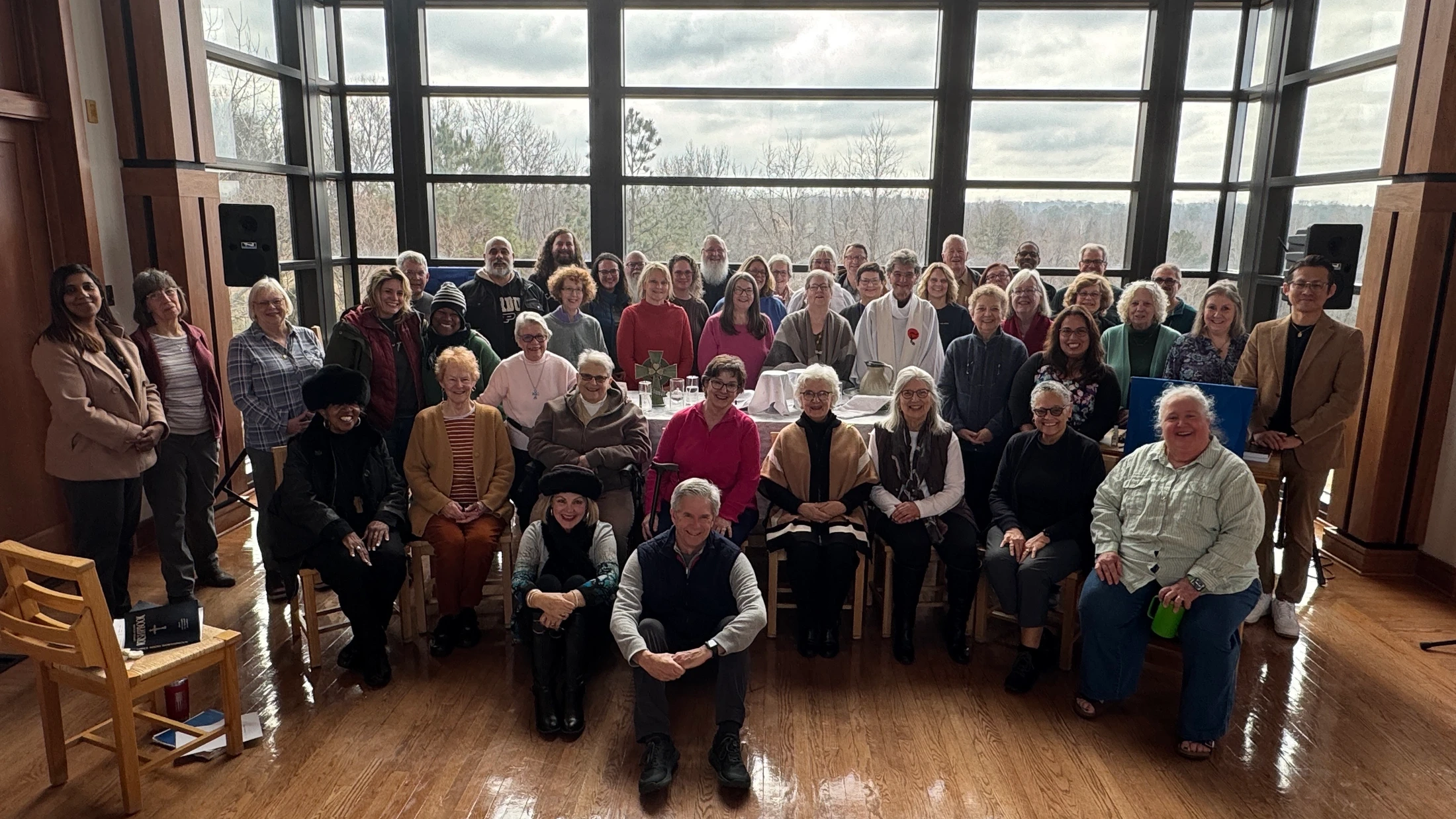
Out of the mouths of babes, God speaks.This weekend, while I was on retreat with Gwen Zanin (and about 50 other folks from the Protestant tribe - see photo below) learning more about the faith tradition of the Celts, one of our teens – Drew East – preached for the very first time.What a wonderful gift to know that God’s spirit is moving in the next generation even while God’s spirit is moving in the heart of your pastor and lay leaders!God is good and God is everywhere.On Sunday evening as I retired to my room for the “Great Silence” I was able to tune into worship on our livestream and hear Drew’s message.What a blessing indeed.
Through our teaching and conversations, I learned that the Celtic Way of Spirituality echoes the Gospel writer’s insistence with its earthy, incarnational vision. In the Celtic imagination, God is not distant or hidden, God shimmers through creation, through community, through the faces and stories of ordinary people. To love God is to love the world God has made—its creatures, its landscapes, its fragile and holy relationships.
Celtic Christians spoke of the “thin places” where heaven and earth seem to touch. John’s challenge suggests that our neighbors—especially the ones who stretch us— are among the thinnest places of all. They become the testing ground of our devotion, the place where our prayers take on flesh.
In this way, 1 John 4:20 and Celtic spirituality meet in a shared conviction: Love is not proven in sentiment but lived out in full
view, in the ways we practice our faith. It is revealed in how we speak, how we listen, how we forgive, how we show up. It is revealed in how we honor the divine image (the Imago Dei in theological terms) in the person right in front of us. Our congregation did this wonderfully as they received a prophetic 16-year-old, who had a message from God to share with us all!
To walk the Celtic path is to let every encounter become a site of reverence. To take John seriously is to let every relationship become
a site of transformation. Together, they invite us into a way of life where loving God and loving neighbor are not two tasks but one seamless movement of the heart.
Celtic Poem to Ponder
“I came too late to the hills. They were swept bare
Winters before I was born of song and story,
Of spell or speech with power of oracle or invocation. . .
Yet I have glimpsed the bright mountain behind the mountain,
Knowledge under the leaves, tasted the bitter berries red,
Drunk cold water and clear from an inexhaustible hidden fountain.”
~ Kathleen Jessie Raine (1908–2003), English poet & scholar.
Questions for Reflection
- How might you practice seeing the divine image in someone that you find difficult, not as an obligation but as a spiritual discipline?
- When have you glimpsed a “bright mountain behind the mountain”—a moment when something deeper, truer, or more holy shimmered beneath the surface of ordinary life?
- What does embodied love look like in the ordinary rhythms of your day?
Prayer
Holy One,
You who are the bright mountain behind the mountain and the hidden fountain that never runs dry— teach us to love the neighbors before us as a true reflection of our love for You. Open our eyes to the wisdom under the leaves, the holiness woven into every face and story. Where we feel we’ve come “too late,” meet us with Your ever‑arriving grace. Send us out as people who have tasted Your clear water and glimpsed Your hidden brightness, that we may love in truth, in practice, and in joy.
Amen.